
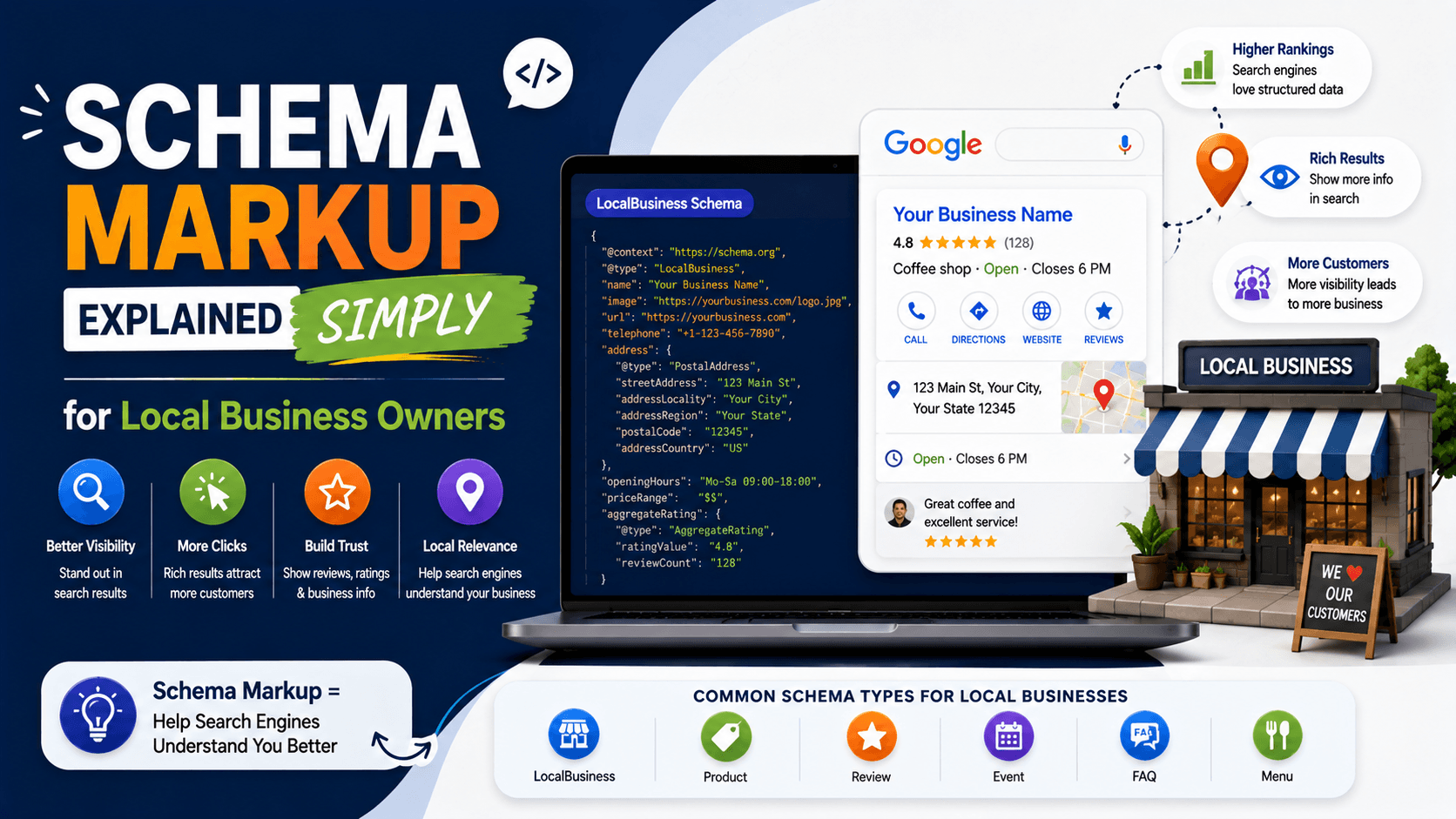
The word “schema” tends to make small business owners’ eyes glaze over, understandably, since it sounds like something meant for developers, not the person running the front counter. But the underlying concept is far more approachable than the technical name suggests, and understanding the basics can help a business owner have a much more productive conversation with whoever builds or maintains their website.
What Schema Markup Actually Does
Schema markup is a way of labeling information on a webpage so that search engines can understand it with more precision, rather than having to guess. Instead of a search engine inferring that a phone number on your page is, in fact, your business phone number, schema markup explicitly tags it as such. Applied to a local business, this typically covers details like your business name, address, phone number, hours, and category, essentially the same core facts that matter everywhere else in local SEO, just labeled in a format machines can read reliably.
Why It Matters More Than It Sounds Like It Should
Search engines and AI-driven search tools increasingly rely on structured data to generate quick answers, like a summary box showing your hours and location without someone needing to click through to your site. Schema markup improves the odds that this information is pulled correctly rather than guessed at or pulled from an outdated source. It doesn’t replace the need for accurate content elsewhere, your website copy still needs to say true things, but it gives search engines a clearer, more structured version of those same facts to work from.
Getting It Set Up Without Learning to Code
Most modern website platforms, whether that’s a page builder or a common content management system, offer plugins or built-in fields that generate local business schema without requiring manual coding. The key is making sure the information entered matches exactly what’s published everywhere else, your website footer, your Google Business Profile, and any directory listings including a profile on a site like City Zen Pro. Consistency across all of these reinforces the same signal from multiple directions rather than working against itself.
Conclusion
Schema markup is one of those behind-the-scenes details that customers will never consciously notice, but it quietly supports the accuracy and clarity of how a business shows up in search. It’s worth the modest setup effort, even if it never becomes a topic of daily conversation.
Frequently Asked Questions
Not necessarily. Many website platforms include plugins or built-in tools that generate basic local business schema without custom coding, though a developer can help with more advanced or customized implementations if needed.